
These 25 copy-paste AI product description templates are for UK Shopify and WooCommerce sellers who need benefit-led, SEO-aware copy for Magic, Claude, ChatGPT or a Woo plugin — then a quick human edit before go-live.
Method companion (not a rewrite): How to Use AI to Write Product Descriptions That Sell.
Why templates beat blank prompts
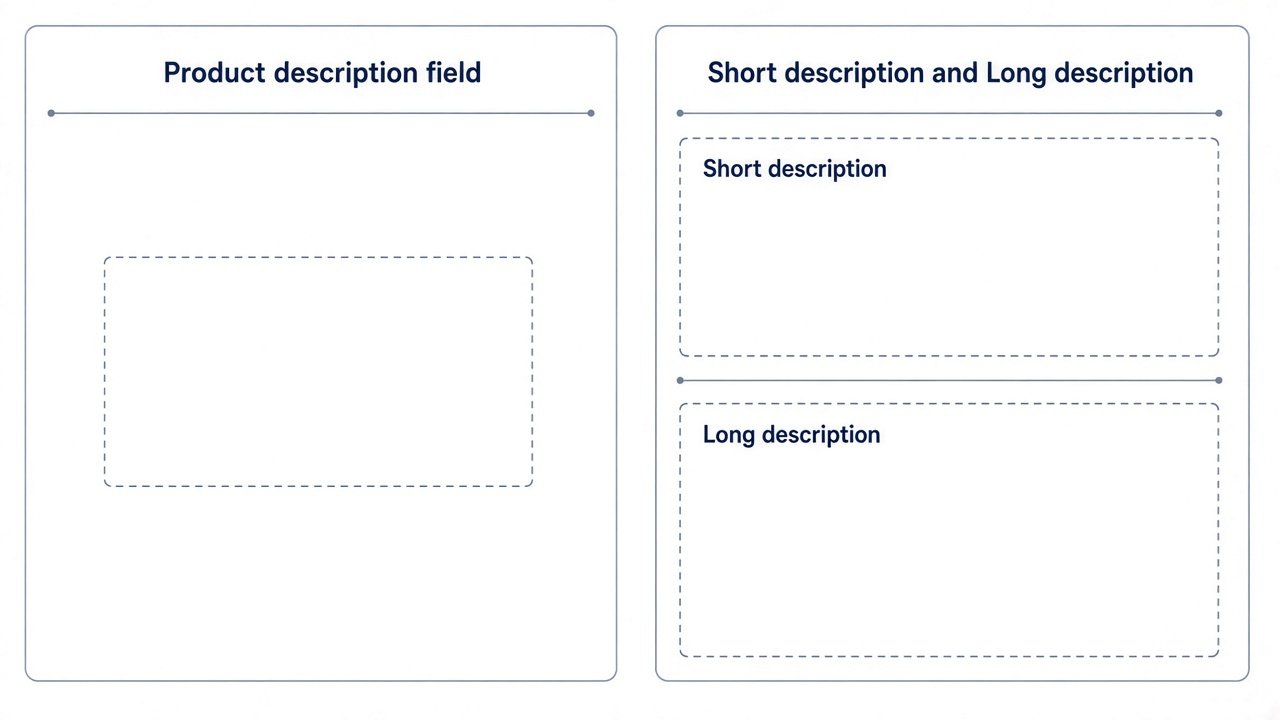
Blank “write a product description” chats drift into fluff. A template forces specs, buyer, tone, keyword and length into Shopify’s description field or Woo’s short/long boxes. Reuse the same inputs; swap only the product block.
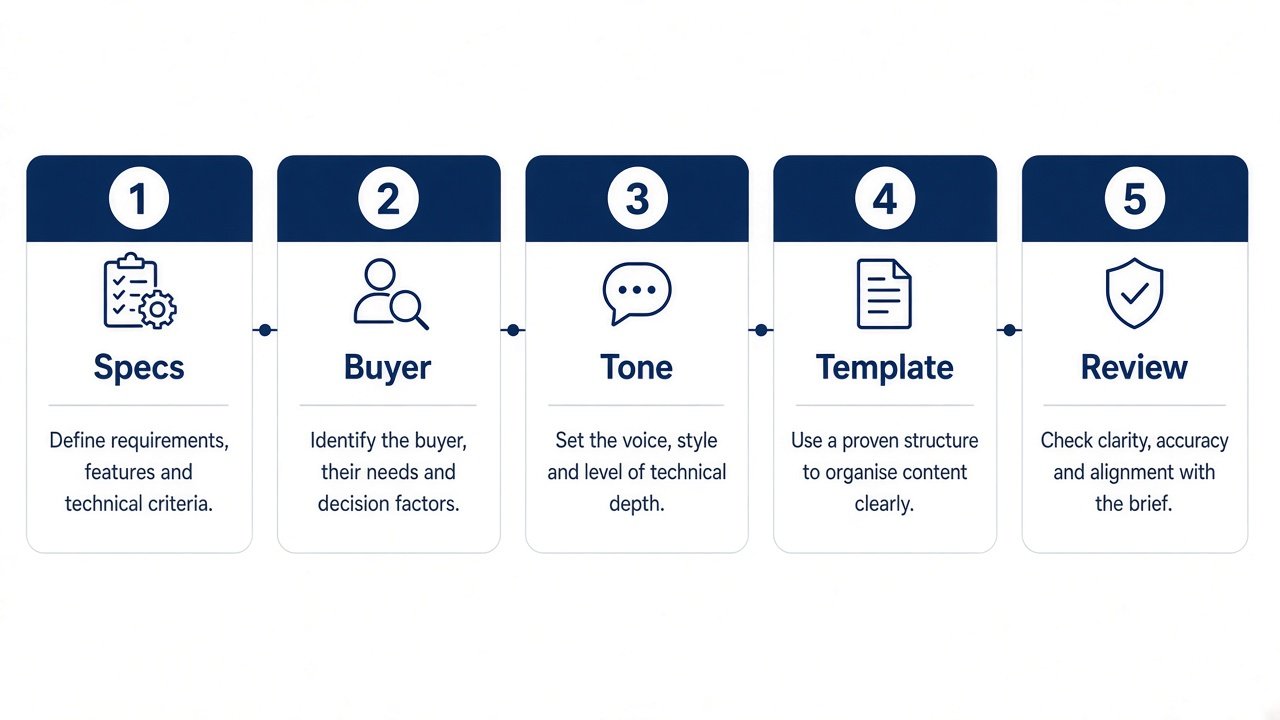
Inputs checklist (fill this before you paste any template)
- Product name + type (what it actually is)
- 3–7 hard specs (materials, sizes, what’s in the box, compatibility)
- Buyer (who buys it in the UK and what job they’re hiring the product for)
- Primary keyword + 1–2 secondary phrases (natural, not stuffed)
- Tone (plain / premium / playful / technical)
- Must-say / must-not-say (claims you can prove; claims you must never invent)
- Price context only if accurate (inc/ex VAT — do not invent)
Shopify Magic templates (1–4)
Shopify Magic’s product-description generator sits in the admin product editor (desktop). Give it title, features/keywords and tone; edit before save. Magic text tools are included with your Shopify plan (no separate Magic fee); feature availability can vary — check your admin. Paste after the product title is set.
Template 1 — Shopify Magic: benefit-led PDP (UK English)
Write a Shopify product description in British English for: [PRODUCT NAME].
Product type: [TYPE]. Key features: [FEATURE 1], [FEATURE 2], [FEATURE 3], [FEATURE 4].
Ideal UK buyer: [BUYER]. Primary benefit: [BENEFIT]. Tone: [TONE].
Primary keyword: [KEYWORD] in the first sentence, naturally.
Structure: opening benefit (2 sentences) → 4 short benefit bullets → one-line CTA.
Do not invent certifications, reviews, or shipping claims. Under 180 words.
Template 2 — Shopify Magic: SEO-focused but readable
Generate a Shopify description for [PRODUCT NAME] ([TYPE]).
Keywords to weave naturally: [PRIMARY], [SECONDARY 1], [SECONDARY 2].
Include: who it’s for, what problem it solves, 3 concrete specs as benefits.
Tone: clear and trustworthy for UK shoppers. No keyword stuffing. ~150 words.
Template 3 — Shopify Magic: premium / gift angle
Write a premium Shopify product description for [PRODUCT NAME].
Materials/finish: [DETAILS]. Occasion: [GIFT / SELF-PURCHASE]. Buyer: [BUYER].
Tone: warm and specific, not luxury clichés. Avoid “premium quality” and “perfect for everyone”.
End with a soft CTA. British English. Under 160 words.
Template 4 — Shopify Magic: rewrite existing thin copy
Rewrite this Shopify description to be benefit-led and scannable. Keep every factual claim; delete fluff.
Current copy: [PASTE].
Add: 4 benefit bullets and one CTA. British English. Primary keyword: [KEYWORD]. Max 170 words.
WooCommerce short / long / FAQ templates (5–8)
WooCommerce has no Shopify Magic equivalent in core. The older experimental “Write it for me” / Woo AI flow was sunset. Jetpack AI helps in the block editor for posts/pages — it is not a one-click Magic clone for every product field. Most UK Woo SMBs paste Claude/ChatGPT into short + long description, or use a third-party plugin with their own API key.
Template 5 — Woo short description (under the title)
Write a WooCommerce short description (excerpt) for [PRODUCT NAME].
Max 40 words. One benefit + one proof point (spec or use case). British English.
Primary keyword: [KEYWORD]. No bullets. No CTA.
Template 6 — Woo long description (main content)
Write a WooCommerce long description in British English for [PRODUCT NAME].
Buyer: [BUYER]. Specs: [LIST]. Tone: [TONE]. Keyword: [KEYWORD] once in the first 40 words.
Structure: intro (3 sentences) → “What’s included” bullets → “Who it’s for” → FAQ-ready closing paragraph.
Do not invent stock, delivery, or warranty terms. 220–280 words.
Template 7 — Woo pair: short + long in one reply
Create both fields for WooCommerce:
1) Short description ≤40 words
2) Long description 220–280 words with H2-style subheads as plain bold labels only
Product: [NAME]. Specs: [LIST]. Buyer: [BUYER]. Keyword: [KEYWORD]. British English. No invented claims.
Template 8 — Woo product FAQ block (for description or accordion plugin)
Write 5 FAQs for [PRODUCT NAME] aimed at UK shoppers.
Base answers only on these facts: [FACTS].
Include one question about fit/compatibility and one about care/use.
Plain British English. Answers under 45 words each. Label Q1–Q5.
Claude / ChatGPT library (9–20)
Use in Claude or ChatGPT. Claude often wins on natural tone; ChatGPT suits bulk batches. Paste into your store yourself — no invented Shopify/Woo “official AI” affiliates here.
Template 9 — Fashion / apparel
Write a fashion PDP description for [ITEM]. Fabric/fit: [DETAILS]. Model note if known: [OR “unknown — do not invent”].
UK sizing note: [e.g. true to size / size up]. Tone: [TONE]. Keyword: [KEYWORD].
Benefit-led open + 5 bullets + care line. British English. 160–200 words.
Template 10 — Home & garden
Product: [NAME]. Room/use: [USE]. Dimensions/materials: [SPECS]. Buyer: UK [BUYER].
Write benefit-led copy; mention indoor/outdoor only if stated. Keyword: [KEYWORD]. 150–180 words.
Template 11 — Beauty / personal care
Write a compliant-sounding beauty description for [PRODUCT]. Ingredients/claims allowed: [ONLY THESE].
Do not invent clinical results. Skin type: [IF KNOWN]. Keyword: [KEYWORD]. British English. ~160 words.
Template 12 — Electronics / accessories
Write a clear tech PDP for [PRODUCT]. Compatibility: [LIST]. Specs: [LIST].
Lead with the job-to-be-done, then specs as benefits. No invented benchmarks. Keyword: [KEYWORD]. 170 words.
Template 13 — Food & drink (shelf / specialty)
Describe [PRODUCT] for a UK online food shop. Ingredients/allergens provided: [LIST — do not add].
Taste/use occasion: [NOTES]. Keyword: [KEYWORD]. Warm, precise British English. 140–160 words.
Template 14 — Soft goods / stationery
Product: [NAME]. Specs: [SIZE/MATERIAL]. Ideal for: [BUYER/USE].
Tone: friendly and specific. Keyword: [KEYWORD]. 3 bullets + short close. 130–150 words.
Template 15 — B2B / supplies
Write a B2B Woo/Shopify description for [PRODUCT]. Specs: [LIST]. Typical UK buyer role: [ROLE].
Focus on reliability, compatibility, and reordering clarity. Formal British English. Keyword: [KEYWORD]. 180 words.
Template 16 — Features → benefits translator
Convert each feature into a customer benefit. Features: [LIST].
Output a two-column style list: Feature — Benefit. Then write a 120-word PDP using only those benefits. British English.
Template 17 — Tone rewrite (keep facts)
Rewrite the following description in a [TONE] voice for UK shoppers. Keep every fact identical; only change wording and rhythm.
Copy: [PASTE]. Keyword: [KEYWORD]. Max 180 words.
Template 18 — Shorten for mobile skim
Cut this description to 90 words for mobile. Keep the strongest benefit and 3 bullets. British English.
Copy: [PASTE].
Template 19 — Expand thin specs into full PDP
I only have these facts: [BULLETS]. Expand into a full product description without inventing materials, certifications, or performance claims.
If something is unknown, omit it. Keyword: [KEYWORD]. British English. 150–180 words.
Template 20 — Bulk batch (ChatGPT-friendly)
Using one consistent structure (benefit open → 4 bullets → CTA), write descriptions for these [N] products.
Rules: British English; primary keyword per row; no invented claims; ≤160 words each.
Data (CSV-style):
SKU | Name | Specs | Buyer | Keyword
[PASTE ROWS]
Conversion extras (21–25)
Template 21 — Objection handler paragraph
Add one short paragraph that answers the top objection: [OBJECTION], using only these facts: [FACTS].
Append to this description: [PASTE]. British English. Max 50 words.
Template 22 — Comparison without naming competitors
Rewrite so shoppers understand when to choose this product vs a generic alternative, without naming rival brands.
Facts: [LIST]. Keyword: [KEYWORD]. 140 words.
Template 23 — Gift-finder blurb
Write a 70-word gift blurb for [PRODUCT] for [OCCASION / RECIPIENT]. British English. No fake urgency.
Template 24 — SEO title + meta description (on-site)
From this product description, propose:
1) SEO title ≤60 characters
2) Meta description 140–155 characters with a soft CTA
Keyword: [KEYWORD]. British English. Description facts only: [PASTE OR FACTS].
Template 25 — Final humanise pass
Humanise this AI draft: remove clichés (“elevate”, “seamless”, “ultimate”, “game-changer”), vary sentence length, keep all facts.
Return only the revised description. British English.
Draft: [PASTE].
Publish gate (do not skip)
- Every spec and claim matches the product (and your UK listing/VAT page if you mention price or delivery)
- No invented reviews, star ratings, or “bestseller” language
- Keyword appears naturally once near the top — not stuffed
- Short field ≠ long field on Woo (don’t paste the same blob twice)
- Read it aloud once — if it sounds like a brochure robot, run Template 25
Built-in vs ChatGPT/Claude vs apps (honest, not a best-of)
- Shopify Magic — fastest path if you already pay for Shopify: generate in-admin from a prompt, then edit. Best for single products and light catalogues. Desktop for description generation per Shopify help.
- Claude / ChatGPT — best control over structure, bulk batches, and brand voice. You copy results into Shopify or Woo yourself. Paid tiers help if you do this daily; free tiers are fine for small catalogues.
- Woo path — core Woo has no Magic twin. Use these templates in Claude/ChatGPT, or a reputable Woo product-description plugin with your API key. Jetpack AI is useful for content pages; don’t assume it replaces a full product-feed workflow.
- Specialist ecommerce apps — worth it when you need bulk + SEO fields + approval queues. Not required for a 20-SKU shop if you’re happy pasting from Claude.
Method deep-dive (buyer profiles, platform variants, review loop): How to Use AI to Write Product Descriptions That Sell. Related reading: Best AI Tools for Ecommerce in 2026.
FAQs
Do I need Shopify Magic and ChatGPT?
No. Magic is enough for many single edits. Use Claude/ChatGPT when you want tighter templates, bulk runs, or Woo fields Magic can’t fill.
Will these templates guarantee higher conversion?
No honest guide can promise a lift. They reduce blank-page time and push benefit-led structure — results still depend on offer, photos, price and trust.
Can I mention GBP and VAT in the description?
Only if the figures are true for that SKU and channel. Prefer your theme’s price block for money; keep body copy about benefits and facts.
Is Woo “AI product descriptions” built-in like Magic?
Not as a Magic-style core feature. Plan on Claude/ChatGPT templates or a plugin — and always human-edit before publish.
Bottom line
Fill the inputs checklist, pick the template that matches your field (Magic, Woo short/long, or chat), then clear the publish gate. Templates don’t replace judgement — they stop you starting from zero on every SKU.
Recommended tools & reading
- Noise Cancelling Headphones — focus while you batch-edit catalogue copy
- Co-Intelligence by Ethan Mollick — practical framing for using AI at work without blindly trusting drafts
- Kindle Paperwhite — read ecommerce and AI craft offline between listing sprints
As an Amazon Associate, we earn from qualifying purchases.
Disclosure: We may earn a commission from Amazon links above. Shopify Magic, WooCommerce, Claude and ChatGPT are described from public documentation and hands-on workflow practice — we are not inventing official partner badges or fake conversion stats. Always verify plan limits and AI features in your own admin.